
Operations
Part of How to enter UK branding awards: tips for first-time entrants
How to enter UK branding awards: tips for first-time entrants
Practical tips for first-time entrants to UK branding awards, covering British English, UK case studies, entry fees, judging evidence and compliance.
What to take away
- UK branding awards reward British English, UK market evidence and clear brand outcomes.
- Match the category to the judging criteria before you write a word.
- Treat the entry as a project with named owners, dates and a budget.
- Use client case studies only with permission and accurate claims.
- Check eligibility, fees and deadlines before you commit.
Start with the award, not the entry
Read the organiser's rules, category definitions and past winners before you open the entry form. Branding awards often sit beside design awards, but they ask different questions. A design award may focus on craft and execution. A branding award usually asks about strategy, positioning and commercial effect.
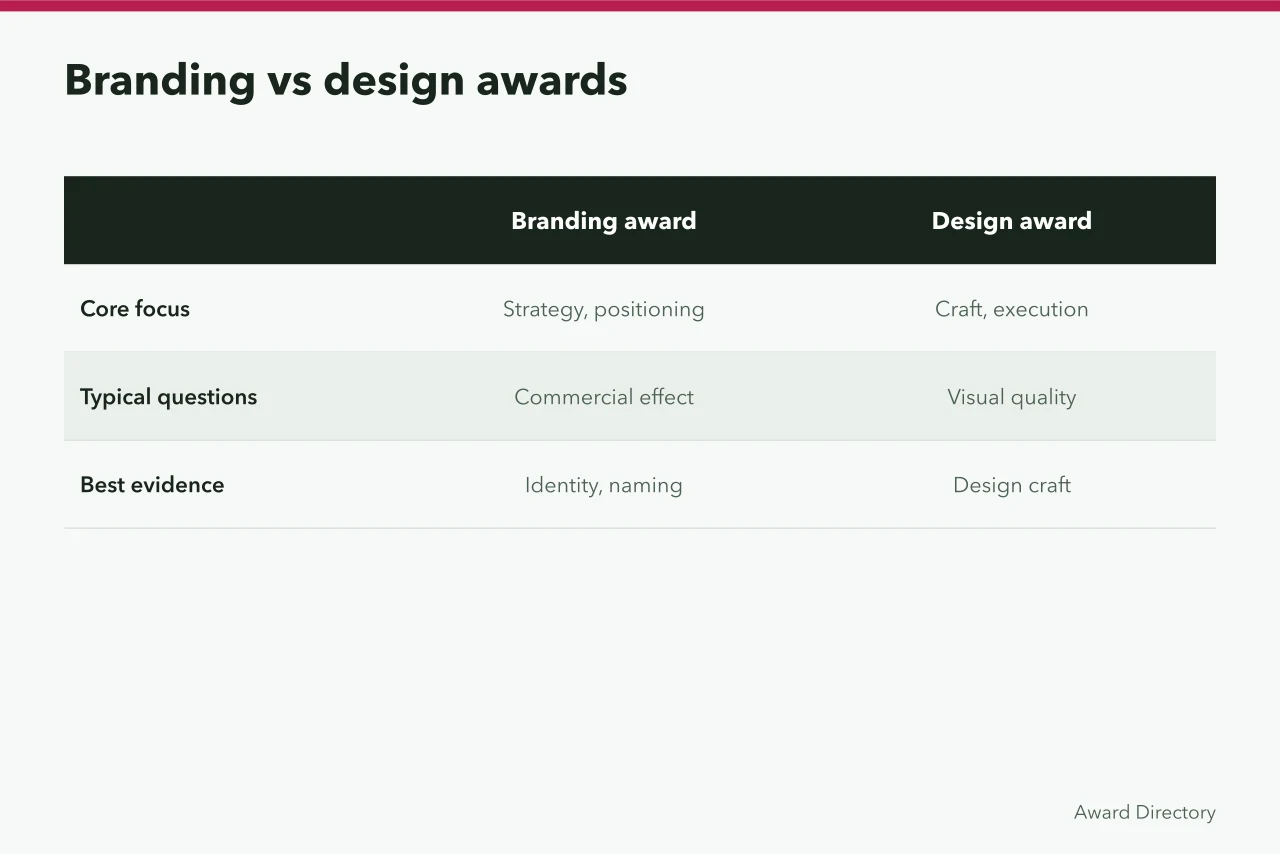
If your work is identity, positioning or naming, check whether the award fits your evidence. The branding awards vs design awards comparison helps you avoid paying for the wrong category. Then list the criteria and score your story against each one.
Match your evidence to the judging criteria
Judges want a clear problem, a brand decision and a measured result. Write the result first, then work backwards to the insight. Use numbers you can defend. If sales rose, say by how much and over what period. If you cannot disclose figures, use a client quote or a before-and-after measure.
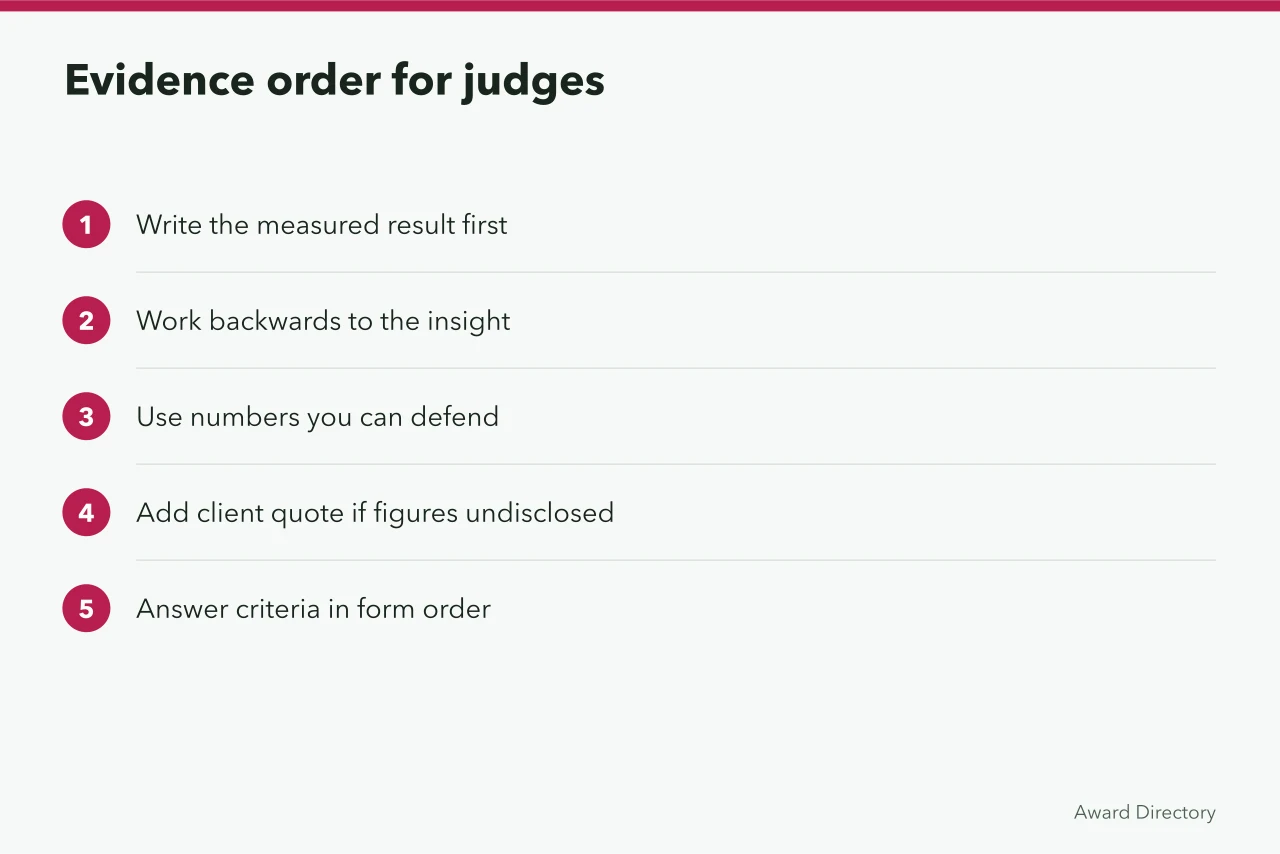
Answer every criterion in the same order as the form. The UK business awards judging criteria article explains how assessors weigh evidence. Do not leave a criterion blank and hope the story carries it.
Write in British English for UK judges
Use British English spellings and UK terminology throughout. Write organisation, recognise and programme when those words fit. Avoid American spellings and phrasing. Judges may be reading dozens of entries, so plain English beats agency jargon.
If you claim UK market knowledge, show it with named regions, channels and customer groups. A case study from Manchester, Glasgow or Cardiff will read differently from a generic global example. Check names and brands carefully. A misspelt client name can undo a strong entry.
Plan the budget and permissions
Entry fees are only one cost. Add copywriting, design, evidence gathering and travel to the ceremony. The UK branding awards entry fees guide sets out the common fee structures.
If the entry uses client data, your lawful basis matters. The ICO's Guide to data protection explains the principles you must follow. Get written permission for logos, quotes and images. Keep a folder of consent records, invoices and final copy. That folder saves time when you enter again or need to prove a claim.
Set a review date two weeks before the deadline. Ask a colleague who does not know the project to read the draft. If they cannot explain the brand result back to you, rewrite the summary.
Build a five-step entry sequence
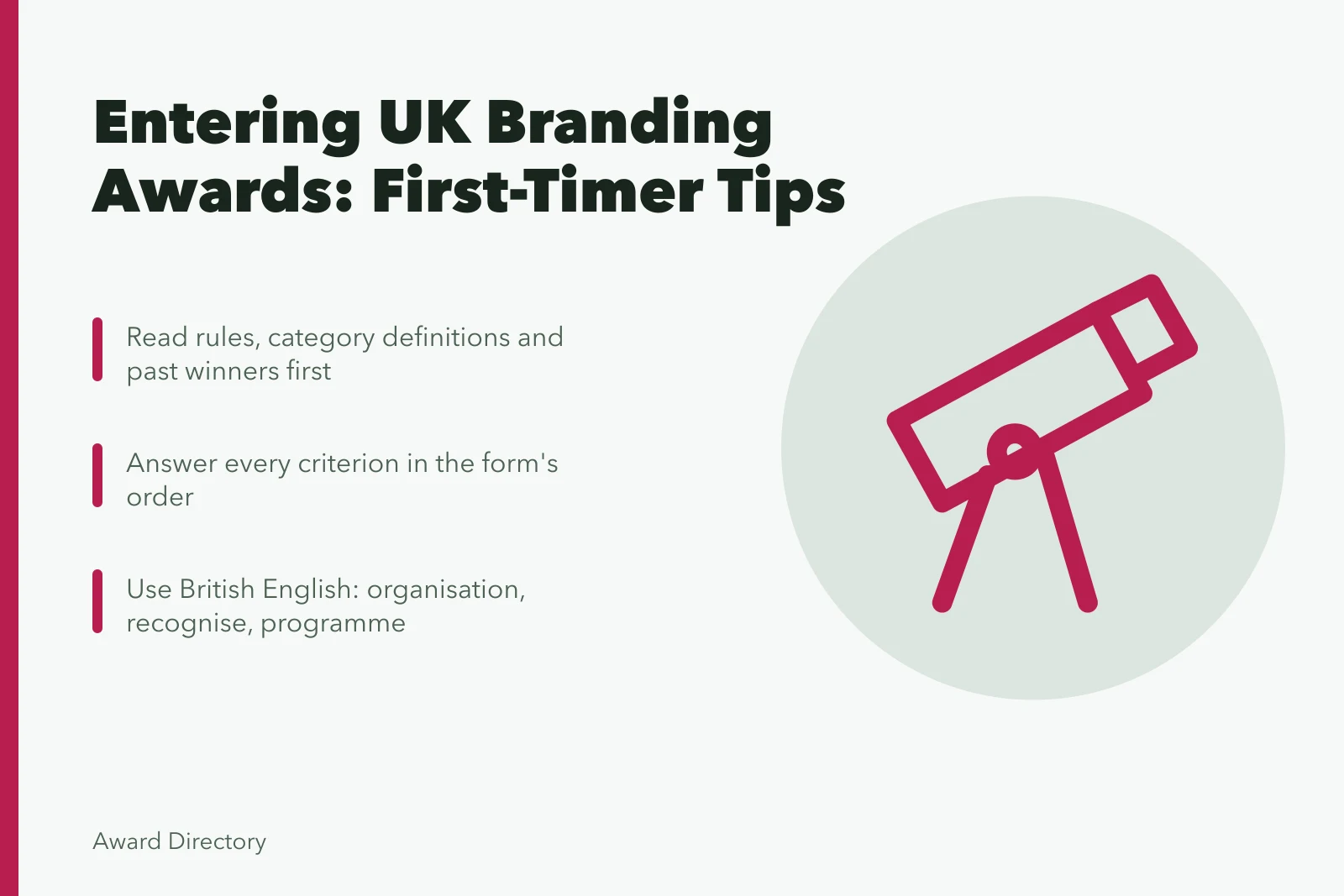
- Confirm the category, eligibility rules, word count and deadline in the organiser's current guidance.
- Write a one-page story that links the challenge, brand idea, execution and result.
- Gather written permission for client names, logos, quotes and images.
- Draft the entry in British English, then edit it against every criterion.
- Submit before the deadline and save the final PDF, receipt and supporting files.
Check your company and claims
Before you submit, check that your registered name and company number match the public record. Companies House holds the register that entry forms often ask you to verify. The Companies House record is the page to check. If you win, your marketing must stay accurate. The UK advertising codes set the rules for award claims. Say which award, which year and which category. Never imply a win you did not receive.
Common questions
Can a small UK agency enter branding awards?
Yes. Many UK branding awards have categories for small agencies and in-house teams. Check the turnover or team-size rules before you choose a category. A clear case study can compete with a larger firm's budget.
Do I need UK market evidence to win?
Most UK judges expect evidence from the market you served. If your client trades in the UK, show UK channels, regions and customer behaviour. If the work is international, explain why it is relevant to a UK audience. Do not pad the entry with global claims you cannot support.
How many categories should a first-time entrant choose?
Start with one or two categories that match your strongest evidence. More entries mean more fees, more writing and more chances to repeat yourself. Review the judging criteria before you add a second category.


